Note /
What a strapping table actually is, and why every volume number traces back to it
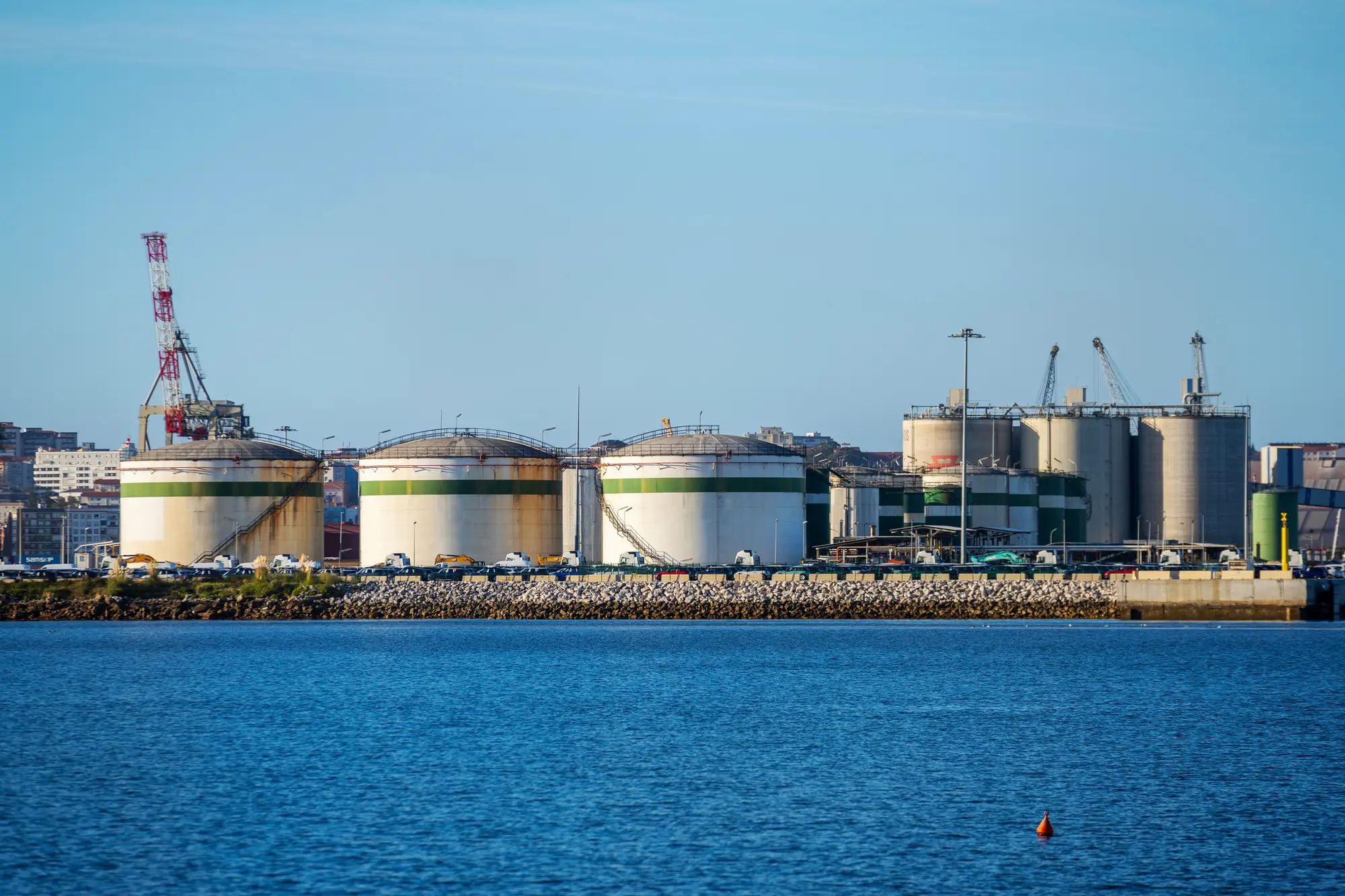
A strapping table is the calibration chart that converts a gauge reading on a tank into a volume. Someone, usually a licensed tank calibration contractor, has physically measured the shell of that tank, course by course, and built a table that says: at this innage or this ullage, the tank holds this many barrels. Without that table, a gauge reading is just a number on a tape. With it, that number becomes the figure that shows up in a terminal's stock report, a custody transfer ticket, or a weekly inventory release.
Every barrel count you see, from a terminal's daily stock position to the agency figures that move Brent and WTI on release day, sits on top of a strapping table somewhere upstream. If that table is wrong, stale, or built on an assumption the tank no longer meets, the volume number is wrong too, no matter how precise the gauge reading itself is.
How a tank actually gets strapped
The traditional method is literal: a crew wraps a calibrated steel tape around the tank shell at set intervals, usually every few feet of shell height, and records the circumference at each course. From those measurements, and the tank's internal fittings, deadwood, and known deformations (tanks are rarely perfect cylinders once they've settled for a few decades), a calibration firm works out the incremental volume per unit of height. That becomes the gauge table, or tank gauge table, that the terminal loads into its automatic tank gauge (ATG) system or keeps as a paper chart for hand-gauging.
API MPMS Chapter 2.2A covers the tape-and-level method; optical reference line methods and electro-optical distance ranging (EODR) have largely replaced manual taping at larger terminals, but the output is the same kind of document: a table mapping liquid level to volume for that specific tank, in that specific condition, on the day it was strapped.
That last part is the part a desk should sit with. The table is a snapshot. Tank shells shift. Floating roofs get reballasted or modified. Bottom sediment and water accumulate and change the effective dead stock. A tank strapped in 2011 and never restrapped is reporting volumes against a shape that may no longer be the shape sitting in the tank farm.
Why the chart, not the gauge, is where the error hides
Traders tend to focus on gauge accuracy, meters, radar level gauges, servo tanks, because that's the instrument that produces the daily read. But the gauge only measures level. The strapping table is what turns level into barrels, and that conversion step is where the real uncertainty sits for anyone trying to reconcile reported stocks against what a tank farm visibly looks like.
Terminal operators are required to recalibrate on a schedule set by regulation or contract, often every five to ten years, or after any shell repair, roof replacement, or settlement event. In practice, recalibration gets deferred. A terminal under commercial pressure has little incentive to pull a tank out of rotation for a strapping survey unless an auditor or a custody dispute forces the issue. So the chart a terminal is gauging against today may be older, and less representative, than the barrels actually moving through it.
For a desk working ahead of a weekly release, this matters less for any single tank and more for the aggregate. Agency stock estimates roll up thousands of individual tank readings, each dependent on its own strapping chart, each built at its own point in time, each subject to its own drift. The headline number is clean. The inputs underneath it are a patchwork of calibration documents of varying age and quality.
A separate read that doesn't need the chart
None of this is a case for distrusting strapping tables as a method; they're the industry standard for a reason, and nobody is retaping every tank in a reporting region before Wednesday's number comes out. It's a reason to want a check that doesn't run through any individual terminal's calibration history at all. Oil Inventory Index builds its read from the shadow a floating roof casts, measured from satellite imagery, so the signal moves with physical fill level rather than with whichever gauge table a terminal last updated.
If you're trying to get ahead of the next EIA print without waiting on terminal-reported numbers that may be leaning on a decade-old strap job, that's worth a look.