Note /
Floating storage vs. onshore tanks: what actually separates them
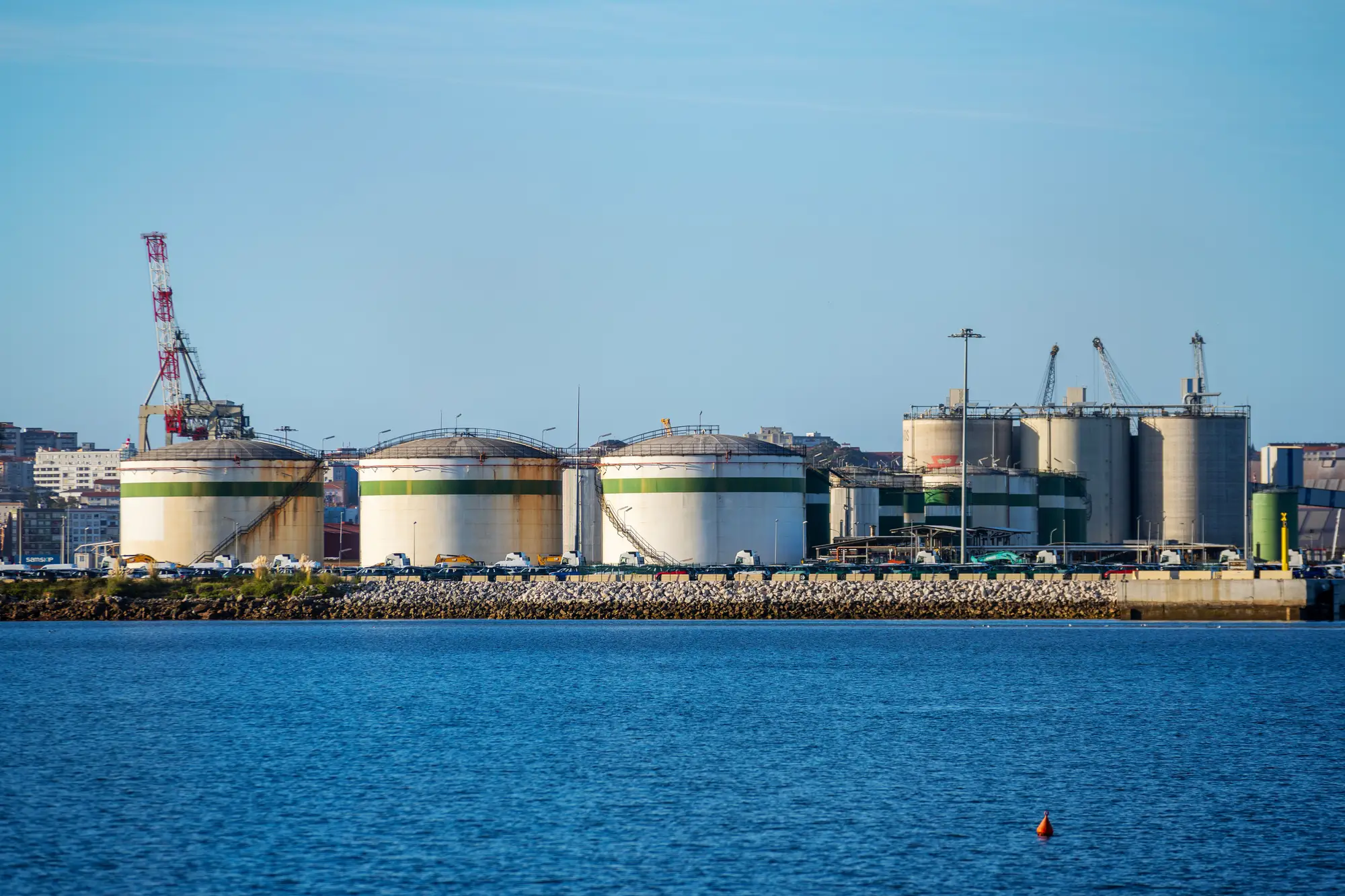
When the front of the WTI or Brent curve goes into a wide enough contango, someone on the desk starts penciling out whether it's cheaper to hold a cargo on a VLCC at anchor than to book shore tankage for it. That question, and how it gets answered, is the whole reason floating storage trades as its own category instead of just an extension of onshore inventory.
What floating storage actually is
Floating storage is crude or clean products sitting in the hold of a tanker, usually a VLCC or Suezmax, loitering at anchor or drifting slowly offshore instead of discharging. It shows up off Singapore, in the Gulf of Mexico, off Fujairah, sometimes stacked up outside the Houston Ship Channel when onshore tanks are full and cargoes have nowhere to go. Ullage reports and AIS tracking are how the market has traditionally picked this up: a tanker sitting still for two or three weeks near a discharge zone, with its draft suggesting it's still loaded, gets flagged as storage rather than transit.
Onshore tank inventory is a different kind of asset. It's fixed capacity at Cushing, ARA, Fujairah's shore terminals, or wherever, metered (in theory) by the operator and reported on a schedule, weekly for EIA, monthly for a lot of international terminals. It doesn't move. A barrel in a shore tank at Cushing stays a Cushing barrel until someone pipes it out. A barrel on a VLCC can reposition to wherever the arb opens up next.
Why the two series tell different stories
Onshore stock builds usually reflect a regional supply-demand imbalance: a refinery outage, a pipeline flow change, a demand air pocket in one market. Floating storage builds reflect something closer to a market structure call. Someone is paying day rate and demurrage to hold a cargo on the water because they expect the contango to widen enough, or the spot price to recover enough, to cover that carry cost plus the trade margin. It's a financing decision dressed up as a logistics decision.
That means floating storage can swing hard and fast in ways onshore tankage never does. A terminal doesn't un-build inventory in a week. A fleet of VLCCs sitting offshore Singapore can unwind in days if the forward curve flattens and the trade stops paying, because the owners were never planning to hold those barrels past the point where the math broke.
VLCC storage economics, in plain terms
The trade only works if contango between prompt and some forward month covers four things: the time charter or hire cost of the vessel, port and anchorage fees, insurance on a cargo sitting idle, and the trader's required margin. Roughly, a VLCC holding two million barrels needs maybe 30-50 cents a barrel a month in contango just to break even on hire, before anyone makes money on it. Below that spread, the economics favor discharging and using onshore tankage, assuming space exists onshore at all. Above it, and especially when onshore tanks are genuinely full (which happened repeatedly through 2020), floating storage becomes the only place left to put the barrel regardless of whether the contango alone would justify it.
That's the other wrinkle: floating storage sometimes isn't a choice at all. When Cushing or ARA tankage runs tight, cargoes get stacked offshore because there's nowhere onshore to send them, and the storage decision stops being about curve shape and starts being about physical availability.
What this means for your stocks read
If you're building a view of total crude stocks, treating floating and onshore as one number flattens two different signals into noise. A draw at Cushing with a simultaneous build offshore Singapore isn't a wash, it's two separate things happening for two separate reasons, and reading them as one hides both stories. Most of the public data infrastructure, agency releases, terminal self-reports, is built around the onshore side and updates on a weekly or monthly lag, which is exactly the gap a daily shore-tank fill read is meant to close by watching floating-roof tanks directly rather than waiting for someone to publish a number.
Keeping the two series separate, and watching the onshore side daily instead of weekly, is a better starting point than most desks have right now.